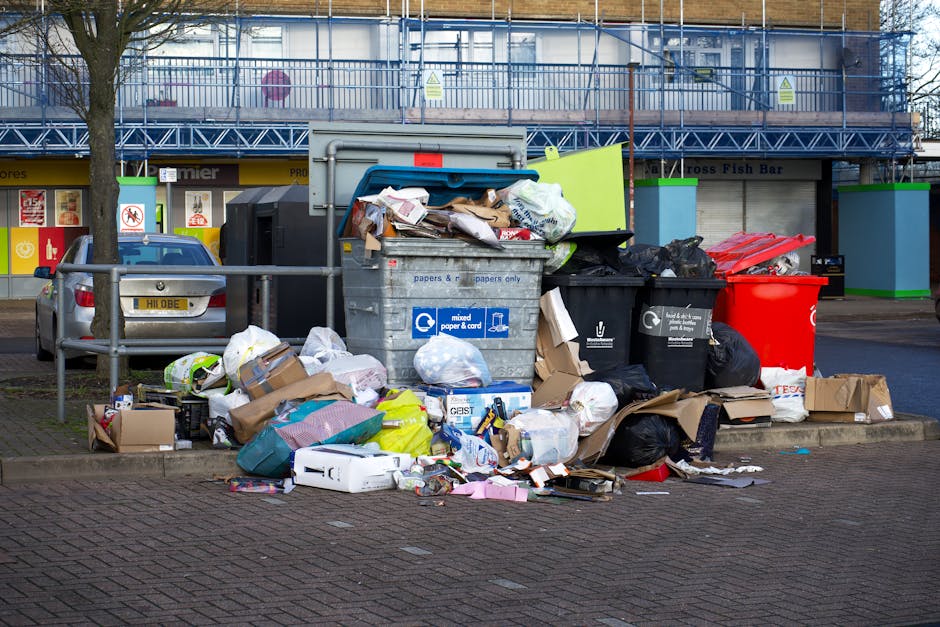
Harrow council rules for bulky rubbish in Kenton: what residents need to know
If you are trying to clear a sofa, mattress, broken wardrobe, or a pile of household junk in Kenton, the rules can feel oddly specific. That is usually where people get stuck. Harrow council rules for bulky rubbish in Kenton affect what you can leave out, what needs booking, what counts as unacceptable waste, and whether a private clearance is the faster route. The good news? Once you understand the basics, it becomes much easier to choose the right option and avoid a costly mistake.
In this guide, we walk through how bulky waste collection typically works in Harrow, what to check before you book, where homeowners and landlords often go wrong, and how to handle larger items safely. We will also cover practical alternatives such as waste removal, furniture disposal, and mattress and sofa disposal when council collection is not the neatest fit. Truth be told, bulky rubbish is one of those jobs that looks simple until you start moving it.
Table of Contents
- Why Harrow council rules for bulky rubbish in Kenton matters
- How Harrow council rules for bulky rubbish in Kenton works
- Key benefits and practical advantages
- Who this is for and when it makes sense
- Step-by-step guidance
- Expert tips for better results
- Common mistakes to avoid
- Tools, resources and recommendations
- Law, compliance, standards, or best practice
- Options, methods, or comparison table
- Case study or real-world example
- Practical checklist
- Conclusion
- Frequently Asked Questions
Why Harrow council rules for bulky rubbish in Kenton Matters
Bulky rubbish is not the same as ordinary household bin waste. A bulky item is usually something too large for the regular weekly collection, like a bed base, sofa, table, wardrobe, exercise bike, or large appliance. In practical terms, the rules matter because they decide whether your waste is collected, whether it needs to be separated, and whether you may need a different disposal route for certain items.
For Kenton residents, the local angle matters too. You may be dealing with limited parking, flats with shared access, a narrow front path, or a collection point that is awkward for a large item. A collection service that works on paper can be a different story on a damp Tuesday morning when a three-seater sofa has to be carried down steps and around a tight corner. You will notice very quickly whether your plan is realistic or not.
Getting the process right also helps you avoid fly-tipping risks, missed collections, and avoidable charges. Councils and authorised waste carriers expect waste to be presented properly. If the item includes anything hazardous, broken glass, electrical parts, or contaminated materials, it may need separate handling. That is why many households compare council collection with private clearance options such as house clearance or home clearance when there is more than one room's worth of rubbish to move.
Expert summary: The smartest bulky waste plan is usually the one that matches the size of the job, the access at your property, and the type of waste you actually have, not just the cheapest headline option.
How Harrow council rules for bulky rubbish in Kenton Works
While exact arrangements can change, bulky waste collections in London boroughs normally follow a similar pattern. You usually need to book in advance, describe the items accurately, and place them out in a way that the crew can reach without delay. The council will often set rules around what can be accepted, how many items are allowed, where they should be left, and whether certain materials need separate disposal.
In plain English, the process is usually less about "put it outside and forget it" and more about "book it properly, present it clearly, and make sure the item matches the description." If you give the wrong details, the crew may refuse the collection or leave part of it behind. That is frustrating, especially if you have already spent half an hour wrestling a mattress down the stairs.
The main things people should check are:
- Whether the item qualifies as bulky rubbish.
- Whether there is a booking system or scheduled collection day.
- How many items are covered per booking.
- What the council will not take, such as hazardous waste or certain electricals.
- Where the items must be left for collection.
- Whether the waste must be dismantled first.
If you are dealing with more mixed waste, such as leftover DIY debris, broken units, and a few old appliances, council collection may not be the most efficient route. In those cases, a service like builders waste clearance or fridge and appliance removal may be more suitable, especially if timing matters.
Key Benefits and Practical Advantages
Using the correct bulky waste route is not just about compliance. It can save time, reduce stress, and prevent the sort of half-finished clearance that leaves you staring at a dining chair in the hallway for three days.
- Cleaner disposal: Your items go into a proper disposal stream instead of sitting on the kerb or in the garage.
- Less risk of fines or complaints: Following the rules lowers the chance of waste being classed as fly-tipped or improperly presented.
- Safer handling: Heavy or awkward items are less likely to cause injuries when you plan the removal properly.
- Better recycling potential: Many bulky items can be dismantled and sorted for recycling rather than going straight to general disposal.
- More control over timing: Private collection can be useful if you need the rubbish gone quickly, while council collection can suit lower-cost planning.
There is also a subtle but important benefit: once bulky rubbish is out of the way, the whole property feels lighter. A flat in Kenton with one old wardrobe removed can suddenly look usable again. That sounds small, but it changes how people feel about the space.
If you are clearing out furniture, the dedicated pages for furniture clearance and furniture disposal are worth considering because they are more targeted for these items than general rubbish handling.
Who This Is For and When It Makes Sense
This topic matters to a broad mix of people in Kenton. Homeowners, tenants, landlords, letting agents, property managers, builders, and small businesses all run into bulky waste sooner or later. A sofa that will not fit through the front door. A fridge left behind after a tenancy. A pile of garden furniture after winter. A loft that has quietly turned into a storage museum. It happens.
It makes sense to understand Harrow council rules for bulky rubbish in Kenton when:
- You have one or more large household items to remove.
- You are preparing for a move or end-of-tenancy clean.
- You need to clear space quickly for decorating or renovation.
- You are dealing with mixed items and are unsure what the council will accept.
- You want to avoid overpaying for a collection method that is too big or too small for the job.
For flats, access often becomes the deciding factor. If you live in a building with shared hallways or limited lift access, a bulk item can be more difficult than it first appears. In those cases, flat clearance may offer a smoother approach, especially when the job is not just one item but a full room's worth.
And for commercial settings, such as a small office in or near Kenton, bulky waste can include desks, chairs, filing cabinets, and old equipment. That is where office clearance or business waste removal is usually a better fit than a household-style collection. Different setting, different rhythm.
Step-by-Step Guidance
If you want a straightforward way to approach bulky waste, use this sequence.
- Identify every item. Write down what you need removed and note whether any item is damaged, wet, broken, or contaminated.
- Check the category. Decide whether it is standard bulky waste, electrical waste, furniture, appliance waste, garden debris, or hazardous waste.
- Measure the larger pieces. This helps avoid surprises when something looks easy but cannot turn the stairwell corner. A quick measure saves a lot of grumbling later.
- Consider dismantling. A table with detachable legs is easier to handle than a full table in one piece. Same for wardrobes, bed frames, and shelving.
- Review access. Make sure the item can be carried safely from where it sits to the collection point.
- Separate restricted items. Batteries, chemicals, paint, fridges, and certain electrical items may need special handling.
- Choose the right route. Book the council collection if the load is eligible and manageable, or use a clearance service if you need more flexibility.
- Prepare the items correctly. Put them where they can be collected safely and keep walkways clear.
A useful trick is to think like the crew that will collect it. If you would hesitate to carry it yourself, it probably needs a better plan. Not every bulky item needs full dismantling, but many do benefit from it.
For mixed waste that includes garden cuttings, old fence panels, or outdoor clutter, garden clearance can be a cleaner option than trying to squeeze everything into a generic bulky waste booking.
Expert Tips for Better Results
After a lot of real-world clearances, a few patterns become obvious. Small prep jobs often make the biggest difference.
- Take photos before booking: A quick picture helps you remember exactly what is going and avoids missed details.
- Keep the route clear: Hallways, front steps, and doorways should be free of trip hazards.
- Group similar items together: Put furniture with furniture, electricals with electricals, and loose rubbish in one controlled spot.
- Check whether the item is reusable: If something is in decent condition, it may be better handled through a clearance service that can sort and separate it.
- Be realistic about weight: A small-looking cabinet can be deceptively heavy, especially if it is solid wood. Annoyingly so.
- Book early during busy periods: End-of-month move-outs and bank holiday weekends tend to fill up quickly.
One more thing: if the bulky waste includes mattresses or sofas, it is worth using a service specifically set up for them. These items are awkward, bulky, and rarely fun to drag outside in the rain. The dedicated page for mattress and sofa disposal is relevant when that is the main job.
And yes, if you find yourself arguing with an old wardrobe in the hallway, that is a normal experience. It does not mean you are doing it wrong.
Common Mistakes to Avoid
Most bulky waste problems come from a handful of avoidable mistakes. The biggest one is assuming that "large household item" means "anything large at all." Councils usually draw a line somewhere, especially around restricted waste and anything that could create a safety issue.
- Putting out the wrong waste: Paint, chemicals, gas canisters, and similar items are usually not treated as ordinary bulky rubbish.
- Underestimating access issues: A front garden wall, narrow stairwell, or locked communal entrance can derail a collection.
- Not separating electricals: Fridges, freezers, and other appliances often need special handling.
- Leaving items too late: If you miss the booking window, the clearance can stall for days.
- Forgetting about dismantling: Flat-pack furniture may need to be broken down before collection.
- Assuming the cheapest option is always best: Not if it means delays, repeated bookings, or missing items.
For appliance-heavy clearances, a dedicated route such as fridge and appliance removal is usually more practical. For renovation jobs, builders waste clearance can handle the kind of debris that bulky household collection may reject.
Tools, Resources and Recommendations
You do not need specialist kit for every job, but a few simple tools make a bulky waste clear-out much easier.
- Measuring tape: Helpful for doorways, lifts, stair turns, and furniture dimensions.
- Work gloves: Useful for splinters, sharp edges, and hidden screws.
- Moving straps or a sack trolley: Handy for heavier items, provided you can use them safely.
- Screwdriver or Allen keys: Often needed for dismantling furniture.
- Dust sheets and bin bags: Good for protecting floors and grouping smaller waste.
On the planning side, it helps to compare your options before you book. If you want broader help with household items and mixed clutter, house clearance or home clearance may be more efficient than a single bulky item service. If you are still at the decision stage, the page on pricing and quotes can help you think through the cost structure without guesswork.
For users who care about how waste is handled after collection, recycling and sustainability is a sensible read. It is always better when a useful item is reused or recycled rather than just dumped and forgotten. Simple, really.
Law, Compliance, Standards, or Best Practice
Bulky waste disposal in the UK sits within a broader waste duty framework. In practical terms, that means waste should be transferred only to a lawful and responsible collector, and you should keep enough care over how it is stored, moved, and handed over. For households, the big takeaway is simple: do not leave waste with someone who cannot demonstrate that they handle it properly.
Best practice also means being honest about what you have. If you describe a waste load as a single sofa and then add a pile of mixed rubbish at the last minute, that creates problems for the collector and for you. Clear descriptions help ensure the waste is handled safely and in the right stream.
For hazardous or sensitive items, caution matters even more. Broken fridges, old paint tins, sharp metals, and unknown liquids should not be treated casually. If you are unsure, separate them and ask for guidance rather than mixing them into general bulky rubbish. That small pause can save a bigger mess later.
It is also sensible to check the provider's safety and insurance approach. Pages such as health and safety policy and insurance and safety are useful for understanding how a professional service approaches risk, handling, and site protection. For payment-related comfort, payment and security can help reassure cautious customers.
Options, Methods, or Comparison Table
There is no single best option for everyone. The right choice depends on how much waste you have, how quickly it needs to go, and whether the items are straightforward or awkward.
| Option | Best for | Strengths | Limitations |
|---|---|---|---|
| Council bulky waste collection | One-off household bulky items | Usually straightforward for eligible items, familiar process | May have booking rules, item limits, and restrictions |
| Private waste removal | Urgent, mixed, or larger clearances | Flexible timing, can handle mixed loads, often faster | May cost more depending on volume and access |
| Furniture-specific disposal | Sofas, tables, wardrobes, beds | Better suited to bulky household furniture | Not ideal for general rubbish or hazardous items |
| Full property clearance | Moves, probate, downsizing, end-of-tenancy | Handles multiple rooms and mixed items efficiently | Overkill for a single item |
If you are clearing a garage full of mixed bits and bobs, the comparison becomes even clearer. A targeted service like garage clearance is often more practical than forcing everything into a one-item bulky booking. Same idea, different scale.
Case Study or Real-World Example
Imagine a Kenton resident clearing a rented flat after a tenancy ends. There is a broken wardrobe, an old mattress, a small fridge, and two bags of odds and ends from the airing cupboard. On paper, it sounds like "a bit of bulky rubbish." In reality, it is a mixed load with different handling needs.
The first instinct might be to book one council collection and hope for the best. But if the fridge needs appliance handling, the mattress is oversized, and the cupboard contents are mixed with general waste, the job can become awkward fast. The resident would need to check each item, decide what can be collected together, and make sure everything is accessible from the property entrance.
In that scenario, a combined approach often works better. Furniture goes through furniture disposal, the appliance is handled separately, and the rest can be dealt with through a wider clearance service. The result is less stress, fewer surprises, and a much cleaner finish. By the afternoon, the flat looks breathable again. You can almost hear the echo.
That is really the value of understanding the local rules: you make better decisions before the waste starts blocking the hallway.
Practical Checklist
Use this checklist before any bulky rubbish collection in Kenton.
- Have I identified every item I want removed?
- Do I know which items are furniture, appliances, or hazardous waste?
- Have I checked whether the council accepts these items as bulky rubbish?
- Do I know where the items must be left for collection?
- Is the route to the collection point clear and safe?
- Should any item be dismantled first?
- Have I separated batteries, liquids, sharp objects, and restricted waste?
- Do I need a faster or larger-scale service instead?
- Have I compared the job with waste removal or a more specific disposal option?
- Am I confident the waste will be handled legally and responsibly?
If you can tick most of those boxes, you are in a good position. If not, pause and re-plan. It is usually cheaper to spend ten minutes reviewing the load than to fix a failed collection later.
Get a free quote today and see how much you can save.
Conclusion
Harrow council rules for bulky rubbish in Kenton are easiest to manage when you focus on the practical details: what the item is, how it can be moved, what the collection service will accept, and whether your job is really a bulky waste job or something bigger. Once those pieces are clear, the rest becomes much simpler.
For some households, a council collection is the right answer. For others, especially where access is tight or the load is mixed, a more flexible service will save time and hassle. Either way, a bit of planning goes a long way. And honestly, that is what makes the difference between a stressful clear-out and a smooth one.
Take your time, keep the process tidy, and give yourself an easier finish. That empty corner in your hallway will feel better than you expect.
Frequently Asked Questions
What counts as bulky rubbish in Kenton?
Bulky rubbish usually means large household items that will not fit in a normal bin collection, such as sofas, beds, wardrobes, tables, and some appliances. Exact acceptance depends on the collection provider and the item type.
Can I leave bulky waste on the pavement in Kenton?
No, not unless it is part of a booked and properly arranged collection. Leaving waste out without the correct process can lead to removal issues, complaints, or enforcement action.
Do I need to dismantle furniture before collection?
Sometimes, yes. Dismantling can make collection safer and easier, especially for wardrobes, bed frames, and large tables. It also helps if access is tight.
Will the council take a fridge or freezer as bulky rubbish?
Sometimes appliances need separate handling, especially fridges and freezers. These items often fall under appliance-specific disposal rather than ordinary bulky waste rules.
What should I do with a mattress or sofa?
Mattresses and sofas are common bulky items, but they are often easier to manage through a dedicated disposal service. That is especially true if you have more than one item or poor access.
Is private waste removal better than council bulky waste collection?
Not always. Council collection can be suitable for a small, straightforward job. Private removal is often better if the load is mixed, urgent, or awkward to move.
Can I put garden waste in a bulky rubbish collection?
Sometimes small amounts may be accepted, but garden waste often needs its own disposal route. For larger outdoor clear-outs, a dedicated garden service is usually better.
What happens if I put out the wrong item?
The collection may be refused, delayed, or only partly completed. In some cases, you may need to rebook or arrange a different disposal route for the item.
How do I know if my waste is hazardous?
If the waste includes chemicals, paint, fuel, batteries, asbestos, or unknown liquids, treat it as potentially hazardous until confirmed otherwise. Do not mix it with general bulky rubbish.
Can a landlord arrange bulky rubbish removal after a tenant moves out?
Yes, many landlords and letting agents arrange it during void periods or end-of-tenancy clearances. It is often the fastest way to reset the property for the next occupant.
What if I have a lot more than one item?
If you have multiple items or several rooms' worth of clutter, a full clearance service is usually more practical than a single bulky waste booking. That avoids repeat visits and awkward sorting on the day.
How can I avoid problems with bulky waste disposal?
List the items clearly, separate restricted waste, check access, and choose the right collection method. A little preparation prevents most of the common issues people run into.